Loft and Lie Explained: How Bending Your Irons Changes Ball Flight
Loft and lie are two of the most important numbers on your irons and two of the most ignored. Loft sets your distance and trajectory. Lie sets your direction. Get one wrong and a good swing still finds the wrong part of the green.
January 22, 2025
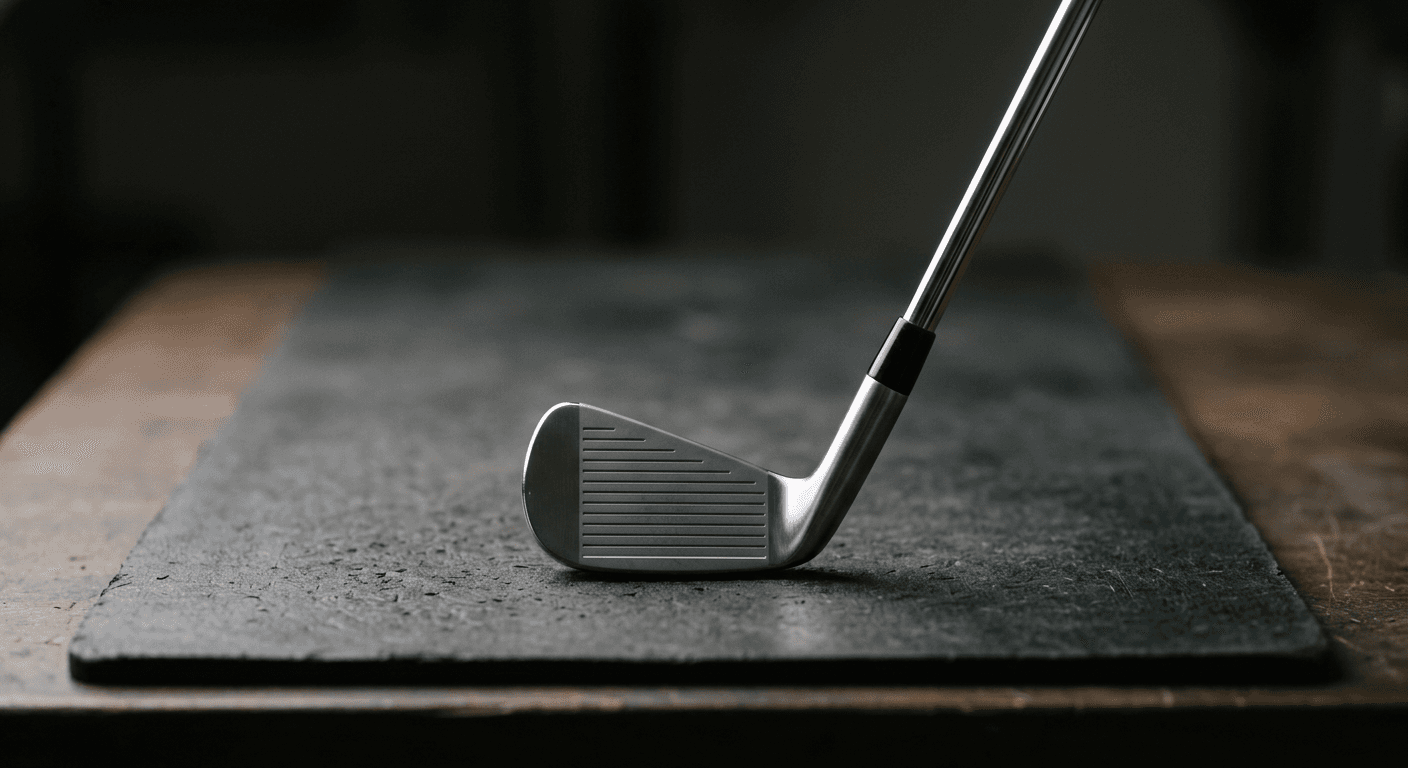
Lie angle is read from how the sole sits at impact, not how the club looks in the bag
Two numbers on an iron decide more about your shots than almost anything else on the spec sheet, and most golfers never check either one. Loft is the angle of the face, and it controls how far and how high the ball goes. Lie is the angle of the shaft to the ground, and it controls which way the ball starts. You can groove a beautiful swing and still miss greens all day if your lie is off by a couple of degrees.
Here is what each one actually does, how to tell if yours are wrong, and what changes when you have an iron bent.
Loft: distance and trajectory
Loft is the tilt of the clubface away from vertical. More loft launches the ball higher and shorter with more spin; less loft launches it lower and longer with less spin. That is the whole reason a pitching wedge and a 5-iron fly different distances even with the same swing.
You can have loft bent stronger (less loft) or weaker (more loft). Bending a 7-iron one degree stronger makes it fly a touch lower and a few yards farther, but it now sits closer to your 6-iron and further from your 8-iron. That is why loft is really a gapping decision, not a distance hack. Iron lofts have also crept stronger from the factory over the years, which is worth understanding before you go changing yours. Our iron loft creep guide covers how far that has gone.
Lie: direction
Lie angle is the angle between the shaft and the ground when the sole rests flat. It matters because of what happens at impact. If the club is too upright for your swing and posture, the toe sits up off the ground and the face points left, so the ball starts left (for a right-handed player). Too flat, and the toe digs down, the face points right, and the ball leaks right. The steeper the club and the shorter it is, the more a lie error shows up, which is why wedges and short irons punish it most.
| At impact | What it means | Typical miss (right-handed) |
|---|---|---|
| Toe sits up | Lie too upright | Ball starts left, pulls and hooks |
| Sole flat | Lie is correct | Ball starts on line |
| Toe digs down | Lie too flat | Ball starts right, pushes and blocks |
One degree of lie is worth a few yards offline.
A rough rule of thumb: each degree of incorrect lie pushes a mid-iron about 3 to 4 yards off target, and it grows with distance. Two or three degrees off is the difference between the middle of the green and the bunker.
How to actually check yours
Do not trust the static chart alone. A wrist-to-floor measurement gives a starting lie, but your swing, posture, and how the club actually delivers at impact are what count. The real test is dynamic: put a strip of impact tape or a dry-erase mark across the sole, hit shots off a lie board, and read the marks. Toward the toe means too flat, toward the heel means too upright, centered means you are good. A launch monitor that reads face and path adds confirmation, but the lie board tells the truth cheaply.
What bending can and cannot do
Adjusting loft and lie means physically bending the hosel on a machine. How far you can go depends on the iron:
Soft forged carbon-steel irons bend the easiest, usually up to around 2 to 4 degrees in either direction, which is why better-player irons are so fitting-friendly. Cast irons can often take a degree or two but are more brittle and reach their limit sooner. Hollow-body and multi-material irons sometimes cannot be bent at all. If you want a set you can dial in over time, the construction matters, which ties into the forged versus cast decision. Never try to bend a club by hand or in a vise. It belongs on a proper machine.
Where golfers go wrong
The most common mistake is chasing distance by bending lofts stronger. It works on paper and ruins your bag in practice: the flight gets lower, the ball stops spinning enough to hold greens, and your gaps collapse so two clubs go the same distance. Loft changes should serve gapping, not ego.
The second mistake is ignoring lie entirely. Golfers spend hundreds on a new driver and never spend twenty minutes on a lie board, even though a wrong lie quietly costs them greens on every iron in the bag. Lie also drifts over time as irons get used and bent slightly in normal play, so it is worth rechecking every couple of seasons.
When it is worth doing
If your iron misses lean consistently one way and your swing does not explain them, get your lie checked before you change anything else. It is one of the cheapest, highest-return adjustments in golf. Loft is worth a look mainly if your gapping is uneven or you want a specific trajectory, not as a distance shortcut.
Any decent fitter can check both in a single session. If you are buying new irons, get fit for loft and lie as part of the purchase rather than as an afterthought. Our club fitting guide covers what to expect, and the free club finder plus the iron database help you match a set to your distances first.
Frequently asked questions
Is loft or lie more important to get fit?
They fix different problems, so it depends on your miss. Lie is the one to check first if your irons pull or push consistently, because it directly controls starting direction. Loft matters most for gapping and trajectory. In a proper fitting you sort both at once.
Can the wrong lie angle cause a hook or slice?
It can nudge you that way. A lie that is too upright points the face left and encourages a pull or hook; too flat points it right and encourages a push or fade. It will not create a huge slice on its own, but it can amplify one and make a straight swing miss sideways.
Do lofts and lies change over time?
Yes. Steel irons can shift slightly from repeated impact and normal handling, so a set that was fit two or three years ago may no longer match its original numbers. A quick recheck every couple of seasons keeps them honest.
Should I bend my own irons at home?
No. Bending requires a loft and lie machine to hold the head correctly and measure the change, and doing it wrong can crack a hosel or leave the specs worse than before. Have a fitter or clubmaker do it. It is inexpensive and takes minutes per club.