Forged vs Cast Irons: What's the Difference?
Forged is treated like a badge of honor in golf, and cast gets dismissed as the cheap option. The reality is more useful and less flattering to the marketing. Here is what the manufacturing method actually changes, and what it does not.
June 18, 2025
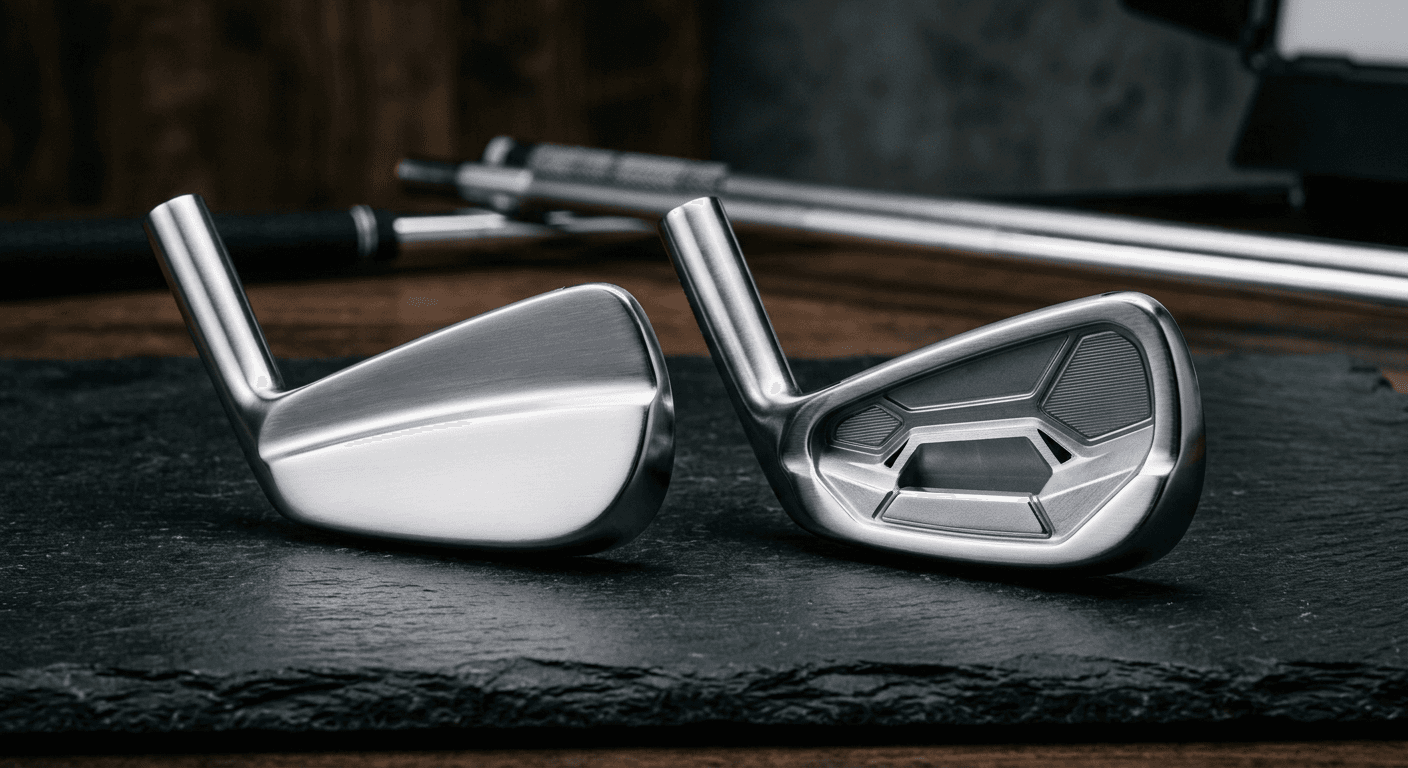
Forged blades and cast cavity-backs are built differently for different players
Say the word forged around golfers and you get a certain reverence. It signals a better player, a softer feel, a purer strike. Cast, by contrast, gets treated like the budget option. Both reputations are half right and half marketing. The manufacturing method does change a few real things about an iron, but far less than the badge on the box implies, and almost never in the way that decides whether a set fits your game.
Here is what forging and casting actually are, what each does well, and how much you should let it weigh on your decision.
What the two terms actually mean
Casting pours molten steel into a mold in the shape of the head. It is efficient, repeatable, and it lets designers build complicated shapes: deep cavities, perimeter weighting, tungsten inserts, hollow bodies. Most game-improvement and distance irons are cast because those forgiveness features need the design freedom casting allows.
Forging starts with a billet of soft carbon steel and presses or hammers it into shape through several stages, then grinds and finishes it, often by hand. The process aligns the grain of the metal and produces the dense, soft feel forged irons are known for. Historically it suited simpler shapes, which is why forged has long been associated with blades and compact players irons.
| Attribute | Forged | Cast |
|---|---|---|
| Feel | Soft, dense feedback | Firmer (but modern casts feel good) |
| Design freedom | Limited (simpler shapes) | High (cavities, tungsten, hollow) |
| Forgiveness | Usually less | Usually more |
| Typical category | Blades, players irons | Game improvement, distance |
| Cost | Higher | Lower |
| Best for | Better ball-strikers | Most golfers |
The feel question
The strongest argument for forged is feel. A well-struck shot with a forged iron does give a softer, more connected sensation at impact, and better players use that feedback to sense exactly where they caught the face. This is real, and if you strike the ball well and care about feel, it is a valid reason to prefer forged.
It is also easy to overrate. Modern cast irons, especially with urethane or other inserts, feel very good, and feel does nothing for your score if the club is not forgiving enough for your strike. Feel is a preference to indulge once forgiveness and fit are handled, not a reason to sacrifice them.
Where casting wins: forgiveness
The features that help you on a mishit, the deep cavities, the weight pushed to the perimeter, the tungsten low and in the toe, all need the design freedom that casting provides. That is why the most forgiving irons on the market are cast. If your misses are inconsistent, a cast game-improvement iron will protect your distance and dispersion in a way a forged blade simply cannot.
Forging is a feel choice, not a performance upgrade.
Two irons with the same head shape and loft will fly nearly identically whether forged or cast. The head design decides forgiveness and distance. The manufacturing method mostly decides feel and price.
The modern blur
The old rule, forged equals blade and cast equals forgiving, is breaking down. Manufacturers now make forged game-improvement irons that combine a forged face for feel with a cast or multi-material body for forgiveness, sometimes with hollow construction and internal tungsten. You can get much of the forged feel without the punishing small head.
The upshot is that forged no longer tells you how forgiving an iron is. You have to look at the head category, blade, players cavity, players distance, or game improvement, rather than the word forged, to know what you are actually getting. Our cavity back vs blade guide covers those categories in detail.
Which one fits you
Start with the head category and forgiveness you need, then treat forged versus cast as a feel and budget preference on top of that.
Better ball-strikers who prioritize feel, workability, and precise gapping, and who hit the center of the face consistently, are the natural audience for forged players irons and blades. The feel is a genuine benefit and the forgiveness they give up costs them little.
Most golfers, including anyone whose strike wanders, are better served by a forgiving cast game-improvement iron. The help on mishits outweighs the feel of a blade every time. If you want forged feel with that forgiveness, look at a forged game-improvement set rather than a blade.
Above all, do not pay a premium for the word forged if what you actually need is forgiveness. A cast iron that fits your swing will score better than a forged one that does not.
How to decide
Get fit, or at least compare on a launch monitor, and judge irons by the numbers that matter: carry, dispersion, and how the misses behave. Feel is worth weighing, but only after an iron proves it fits your strike. If two sets perform the same and one feels better in your hands, take the one that feels better.
To narrow the field first, the free club finder matches iron sets to your carry distances, and the iron database lists the category and specs for every set so you can compare forgiveness and loft, not just the marketing. For help choosing the right category, see our iron buying guide.
Frequently asked questions
Is forged or cast better for feel?
Forged generally feels softer and gives more feedback, which is its main advantage. Cast has closed the gap with modern inserts and materials, so the difference is smaller than it used to be, but a well-struck forged iron still has a distinctive soft feel many players prefer.
Do tour players use forged or cast irons?
Most tour players use forged irons, because they are elite ball-strikers who value feel and workability and do not need much forgiveness. That is a reason forged suits their game, not proof that forged is better for yours. Their needs are the opposite of most amateurs.
Are cast irons lower quality?
No. Casting is a precise, modern process used in excellent irons at every price point. It is the method that makes forgiveness possible, which for most golfers is more valuable than the feel of a forged blade. Lower cost does not mean lower quality here.
Should I switch from cast to forged as I improve?
Only if your strike gets consistent enough that you stop needing forgiveness and start valuing feel and workability more. Many good golfers happily play forgiving irons for life. Improvement is a reason to re-fit, not an obligation to move to blades. See how iron specs have shifted for another factor to check when you upgrade.