Which Golf Clubs Hold Their Value? Used Prices for 119 Models (2026 Data)
We priced 1,585 used listings across 119 drivers, woods, hybrids, iron sets, wedges and putters against verified launch prices, then tracked 72 used clubs through to their sale. Drivers lose half their value in two seasons. Irons hold theirs far better. Ping holds value best and Cobra holds it worst.
November 1, 2026 · How we check our data
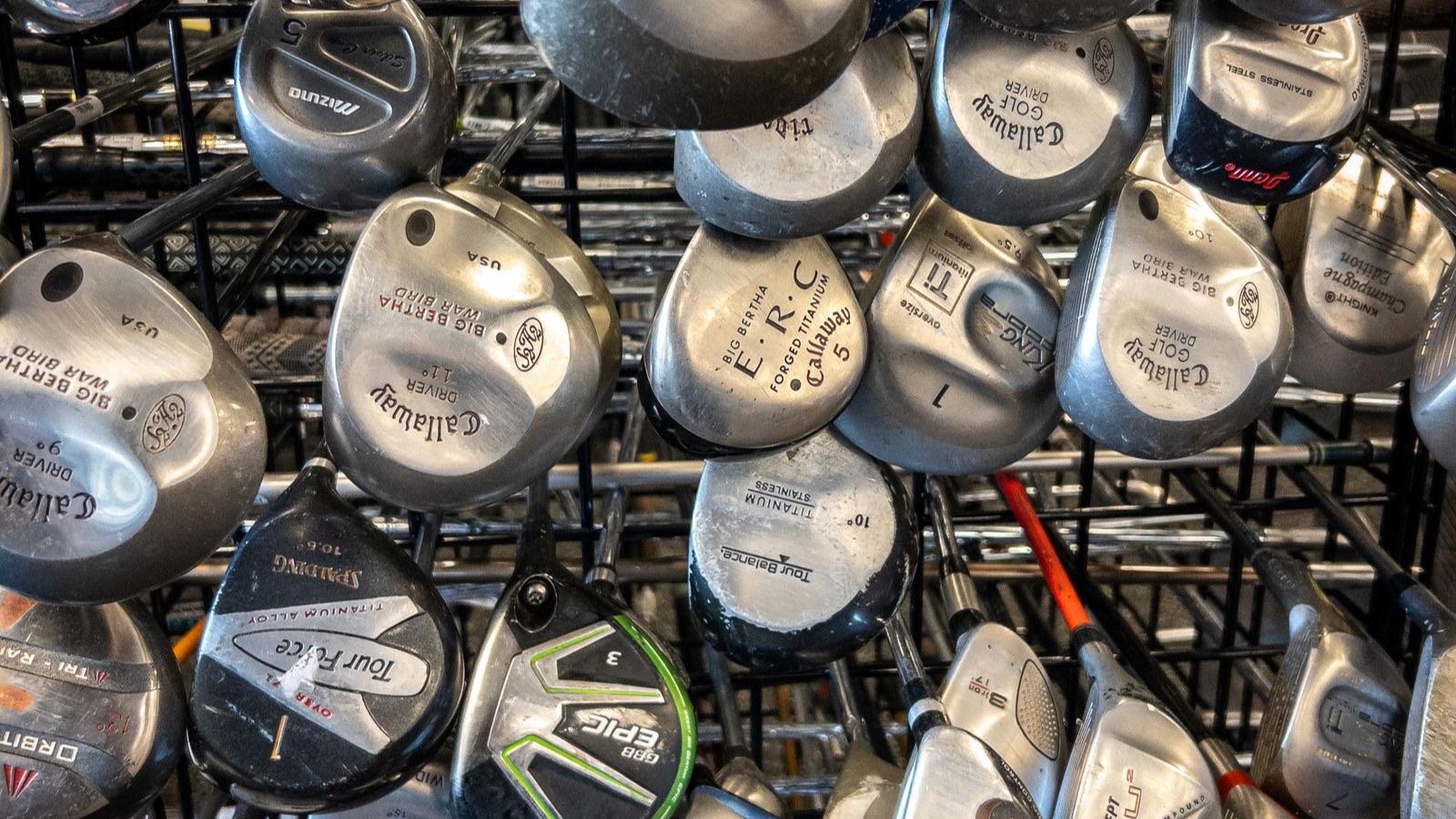
Used woods on a shop rack. Photo: Pexels.
Every golf company will tell you its new driver is worth $600. Nobody tells you what it will be worth three years from now, when you want to sell it and buy the next one. We think that number matters as much as ball speed, so we went and got it.
We pulled the full used inventory of Golf Partner USA, one of the largest used-club shops selling online in the US: 6,107 club listings on November 14, 2026. We matched 1,585 of them to 119 models whose launch prices we checked by hand, iron sets included. Then we went back to the 208 used listings our price tracker had followed since August at three shops and checked which ones had sold. Seventy-two had.
Every number here comes from real listings and verified launch prices. If you are buying, this tells you when a used club is a deal. If you are selling, it tells you roughly what you will get back.
The short version. A driver keeps about half its launch price after one season, 45% after two, and about 35% after three or four. Fairway woods and hybrids lose value a little more slowly. Iron sets hold up best, at around 65% of launch per club through four seasons.
Brand matters more than anything else. A 2023 Ping G430 Max still lists at 60% of launch. The TaylorMade and Callaway drivers from that season list at 35% to 37%, and Cobra's 2023 Aerojet lists at 22%.
Used clubs that sold went for a median 93% of what the same model was listed at, and 39% of them had a price cut before they sold.
The resale value award winners
These are the clubs that stood out in the data, for good reasons and bad. "Value kept" is the median used price divided by the launch price. For iron sets we compare price per club, because used sets come in anything from five to eleven pieces. The full tables are further down.
Holds value best: driver
Ping G430 Max (2023)
60% of its $600 launch price after three seasons, $360 median across 158 listings
Nothing else from 2023 comes close. TaylorMade's Stealth 2 and Callaway's Paradym launched the same season at the same price and now list at $221 and $208. The G430 Max lists at $360, and it was the most stocked driver in the whole catalog, so this isn't a fluke of a few listings.
The current G440 drivers keep 72% after a season, the best of any brand. Ping's edge does fade with age, though. The 2019 G410 drivers list at 30%, the same as anyone else's.
Buy it if
You want a forgiving driver you can sell later without taking a beating, or you plan to keep it for years anyway.
Skip it if
You are hunting for the cheapest used driver. A 2023 Stealth 2 or Paradym costs about $140 less used.
Holds value best: irons
Ping G730 (2024)
72% of its $185 per-club launch price after two seasons, $133 per club across 18 sets
Irons are the surprise of this report. The eight iron models we could price kept a median of about 65% of launch per club through their fourth season, well above any wood. The Ping G430 irons keep 74% after three seasons, and the players' distance i530 keeps 64%.
The reason is simple enough. Iron technology moves slower than driver technology, golfers keep sets for years, and nobody launches a new iron set every January the way they do drivers.
Buy it if
You want game improvement irons and would rather not pay launch price for a set that will hold its value anyway.
Skip it if
You need a specific set makeup or shaft. Used sets come in whatever configuration the last owner bought.
Holds value best: fairway wood
Ping G440 Max fairway (2025)
83% of its $349 launch price after one season, $289 median across 10 listings
Fairway woods hold value a little better than drivers at every age we measured. The two-season-old models keep a median of 53%, against 45% for drivers.
Buy it if
You want a 3-wood or 5-wood you will keep a long time. Fairway woods stay in the bag for years.
Skip it if
You are price sensitive. A 2024 TaylorMade Qi10 fairway lists at $187, which is $100 less.
Best used buy: driver
Callaway Elyte (2025)
40% of its $599.99 launch price after one season, $240 median across 135 listings
A one-season-old Callaway driver at 40% of launch is a strong price. Callaway drivers lose value fast, which is bad news for the first owner and good news for you. The Elyte Max Fast also lists at $240, and the Elyte Triple Diamond at $304.
Buy it if
You want a current-generation driver for well under $300. A new Elyte was $400 at Par West Golf in early November, so used saves you about $160.
Skip it if
You need a heavy, stiff shaft. Many of these listings carry lighter Japanese-market shafts, so check the shaft before you buy.
Best used buy: irons
Ping i230 (2022)
57% of its $203 per-club launch price after four seasons, $115 per club across 21 sets
This was the most stocked iron set in the catalog, and it holds value better than any driver in our data. A used set still costs real money, but it is a lot of iron for the price.
Buy it if
You are a better player who wants a tour-level cavity back. A six-piece set works out to about $690 used.
Skip it if
You want to be fitted for lie angle and shaft. A used set comes built to the last owner's specs, so budget for a refit.
Fastest depreciation
Cobra drivers
Aerojet (2023): 22% of $549 after three seasons. DS-Adapt (2025): 31% after one season.
Cobra was the weakest brand for resale at every age we could measure. The 2024 Darkspeed Max lists at 25% after two seasons. Frankly, that is a demand problem, not a sign the clubs are bad, and it makes Cobra the bargain of the used market.
Buy it if
You want a modern adjustable driver at the lowest possible price. A 2023 Aerojet lists at $119.
Skip it if
You buy new and plan to sell in a couple of years. You will get very little back.
When new beats used
Callaway Rogue ST Max fairway (2022)
Used median $136 across 12 listings. New closeout $150.
On recent drivers, used saves you real money: $105 to $225 against current new prices on every model we could compare. On older clubs still sold new at clearance, the gap can shrink to almost nothing. Always check the new price first.
Buy it if
You find it used for well under $136 in good condition.
Skip it if
The new closeout is still around. For $14 more you get an unworn face, a warranty and your choice of loft.
How fast each type of club loses value
Each model counts once in these figures, using its own median. Otherwise the most heavily stocked models would decide the result. The number in brackets is how many models sit behind each figure.
| Club type | 1 season or less | 2 seasons | 3 to 4 seasons | 5 or more |
|---|---|---|---|---|
| Drivers | 51% (19) | 45% (11) | 35% (17) | 30% (11) |
| Fairway woods | 83% (1) | 53% (3) | 44% (7) | 36% (12) |
| Hybrids | 53% (1) | 49% (2) | 43% (4) | 39% (5) |
| Iron sets, per club | 63% (2) | 64% (3) | 65% (2) | 48% (1) |
| Wedges | 71% (2) | 50% (2) | 50% (2) | no data |
| Putters | no data | 63% (1) | 49% (3) | no data |
Drivers lose value fastest. They drop to about half of launch within a season and keep falling until they bottom out around 30%. In dollars, most drivers five or more seasons old list for $110 to $210.
The steep part of the curve is the first two seasons. After that, waiting another year saves you a few percent of launch price, roughly $30 on a $600 driver. That is the most useful number here for a buyer. Once a driver is two or three seasons old, you are near the bottom.
Wedges keep about half their value. Grooves wear, and a wedge that has played a few seasons spins less than a new one. Spin is the reason you carry a wedge, so used ones sell cheaper than you might expect for a club that costs $170 new. Buy your scoring wedges new. Our wedge guide covers what to look for.
Which brands hold their value
Drivers only, by brand and age, with each model counted once:
| Brand | 1 season or less | 2 seasons | 3 to 4 seasons | 5 or more |
|---|---|---|---|---|
| Ping | 72% (4) | no data | 53% (2) | 30% (3) |
| Titleist | no data | 60% (2) | 43% (1) | 27% (2) |
| Srixon | 51% (3) | no data | no data | 37% (2) |
| TaylorMade | 50% (4) | 45% (3) | 32% (6) | 31% (1) |
| Callaway | 43% (4) | 45% (4) | 35% (5) | 27% (3) |
| Cobra | 31% (4) | 29% (2) | 22% (2) | no data |
Ping and Titleist hold value best in the first few seasons. Callaway and TaylorMade sit in the middle, and Cobra trails at every age. By five seasons, though, the gap closes, and every brand lands somewhere between 27% and 37%.
Price data can't prove why, but the pattern fits how the brands sell. Ping and Titleist run two-year cycles, so their drivers have been replaced half as many times as a rival of the same age. TaylorMade and Callaway launch every year, and the outgoing model soon sells new at a discount. When a new Elyte is $400 on sale, a used one has to come in well under that to sell.
What used clubs actually sell for
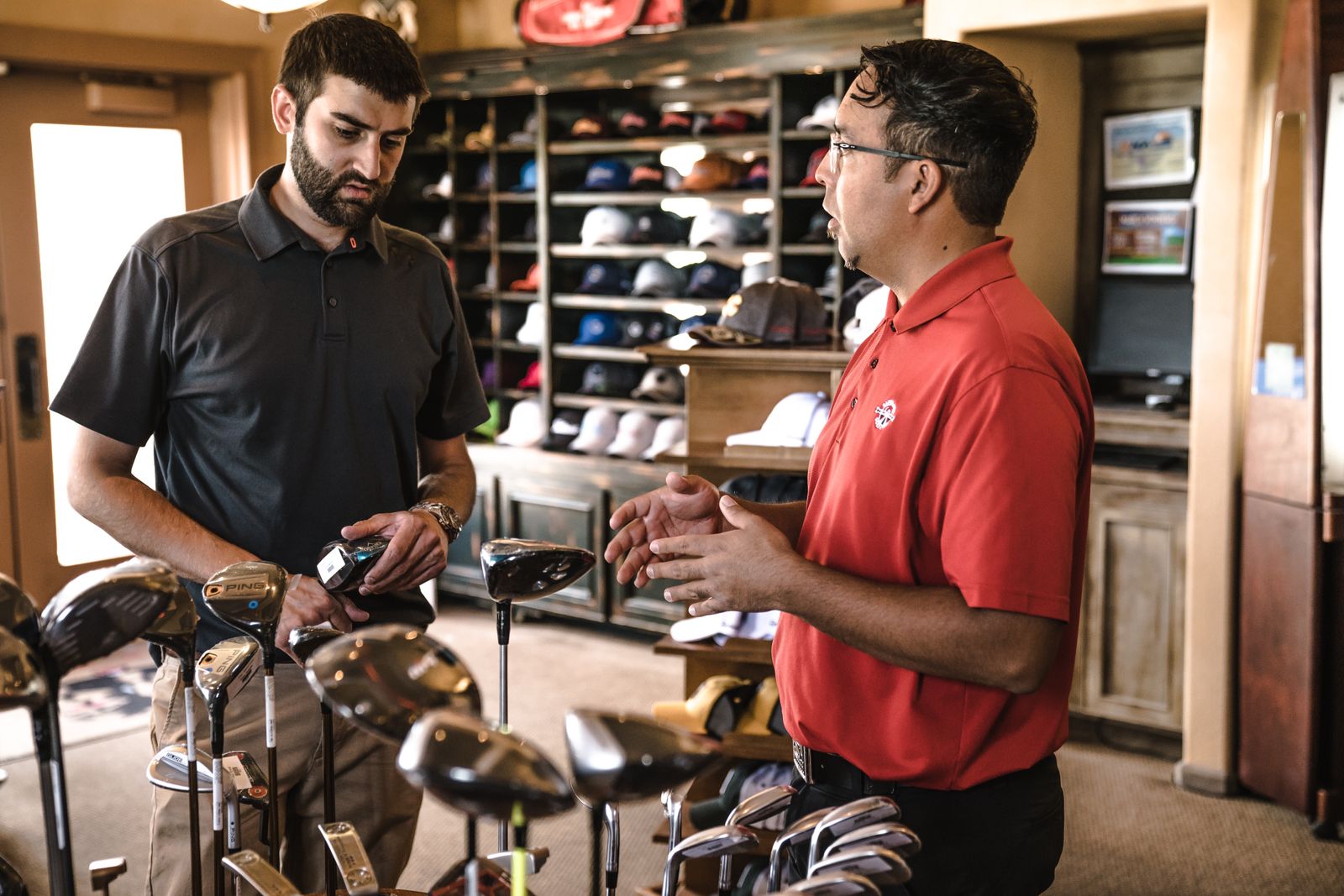
An asking price is only half the story, so we also measured sales. Since August, our price tracker had followed 208 used listings for these models at Golf Partner USA, Mike's Golf Outlet and The Golf Hub. On November 14 we checked every one of them. Seventy-two had been taken down. Used shops sell one-off items, so a removed listing almost always means a sale, and we count it as sold at the last price we saw.
- Clubs sold close to the asking price. For the 30 models with both sold and unsold listings, the sold ones went for a median 93% of what the same model was still listed at.
- Markdowns are common. 28 of the 72 clubs that sold, or 39%, had a price cut first. The median cut was about 10%.
- Sold drivers followed the same curve as asking prices. They kept 72% of launch when one season old or newer (5 sales), 52% at two seasons (17), 39% at three to four seasons (27) and 36% at five or more (6).
For a seller, that means you should expect to get about 90% of what similar clubs are listed for, not the full asking price. For a buyer, it means patience pays. If a listing has been up for a couple of weeks, a 10% markdown is a fair bet.
How we calculated value kept
Asking prices. On November 14, 2026, we downloaded Golf Partner USA's full public catalog: 6,107 club listings. We dropped open box and brand new items and matched the rest to our club database. A listing only counted if its model name matched exactly and its model year was printed in the title or unique to that model. That left 1,585 listings across 119 models.
Sale prices. The 208 listings our tracker followed from August 15 to November 7 at Golf Partner USA, Mike's Golf Outlet and The Golf Hub. A listing that had been removed by November 14 counts as sold, at its last price.
Launch MSRP. The original US list price for the standard configuration. We checked every one by hand against manufacturer releases and launch coverage. That check found several errors in our own catalog, including Ping G430 fairway woods listed at $299 instead of $385, and the Ping i230 and i530 irons each listed a year late.
Value kept. The used median divided by launch MSRP. For iron sets, the used price per club divided by the launch price per club in steel.
Age. 2026 minus the launch year, so a 2023 driver is three seasons old.
What this data still can't tell you:
- Asking prices come from one shop. Golf Partner USA has by far the deepest catalog, but many of its listings carry Japanese-market stock shafts, and other shops will price a little differently.
- Sale prices come from removed listings, so a few may have been pulled rather than sold. The sample is 72 sales, enough for the overall pattern but not for model-by-model sale prices.
- Iron coverage is real but thinner than woods: 73 sets across 8 models with verified launch prices.
The data: drivers
Every driver with at least three listings, newest first.
| Driver | Launch | MSRP | Used median | Value kept | Listings |
|---|---|---|---|---|---|
| Callaway Quantum Max Fast | 2026 | $700 | $476 | 68% | 4 |
| Ping G440 K | 2026 | $649 | $476 | 73% | 5 |
| TaylorMade Qi4D | 2026 | $650 | $484 | 74% | 5 |
| Callaway Elyte | 2025 | $600 | $240 | 40% | 135 |
| Callaway Elyte Max Fast | 2025 | $600 | $240 | 40% | 74 |
| Callaway Elyte Triple Diamond | 2025 | $650 | $304 | 47% | 16 |
| Cobra DS-Adapt | 2025 | $549 | $170 | 31% | 23 |
| Cobra DS-Adapt LS | 2025 | $549 | $170 | 31% | 25 |
| Cobra DS-Adapt Max-D | 2025 | $549 | $170 | 31% | 5 |
| Cobra DS-Adapt Max-K | 2025 | $549 | $170 | 31% | 9 |
| Ping G440 LST | 2025 | $599 | $433 | 72% | 10 |
| Ping G440 Max | 2025 | $599 | $433 | 72% | 13 |
| Ping G440 SFT | 2025 | $599 | $433 | 72% | 3 |
| Srixon ZXi | 2025 | $550 | $280 | 51% | 33 |
| Srixon ZXi LS | 2025 | $550 | $280 | 51% | 22 |
| Srixon ZXi MAX | 2025 | $550 | $280 | 51% | 11 |
| TaylorMade Qi35 | 2025 | $600 | $296 | 49% | 13 |
| TaylorMade Qi35 LS | 2025 | $650 | $306 | 47% | 11 |
| TaylorMade Qi35 Max | 2025 | $600 | $304 | 51% | 18 |
| Callaway Paradym Ai Smoke | 2024 | $600 | $306 | 51% | 16 |
| Callaway Paradym Ai Smoke Max | 2024 | $600 | $255 | 43% | 27 |
| Callaway Paradym Ai Smoke Max D | 2024 | $600 | $255 | 43% | 11 |
| Callaway Paradym Ai Smoke Triple Diamond | 2024 | $600 | $280 | 47% | 3 |
| Cobra Darkspeed LS | 2024 | $549 | $187 | 34% | 11 |
| Cobra Darkspeed Max | 2024 | $549 | $136 | 25% | 5 |
| TaylorMade Qi10 | 2024 | $600 | $280 | 47% | 14 |
| TaylorMade Qi10 LS | 2024 | $630 | $246 | 39% | 7 |
| TaylorMade Qi10 Max | 2024 | $600 | $272 | 45% | 15 |
| Titleist GT2 | 2024 | $649 | $408 | 63% | 5 |
| Titleist GT3 | 2024 | $649 | $374 | 58% | 11 |
| Callaway Paradym | 2023 | $600 | $208 | 35% | 24 |
| Cobra Aerojet | 2023 | $549 | $119 | 22% | 8 |
| Cobra Aerojet LS | 2023 | $549 | $119 | 22% | 5 |
| Ping G430 Max | 2023 | $600 | $360 | 60% | 158 |
| Ping G430 SFT | 2023 | $600 | $280 | 47% | 3 |
| TaylorMade Stealth 2 | 2023 | $600 | $221 | 37% | 10 |
| TaylorMade Stealth 2 HD | 2023 | $600 | $221 | 37% | 5 |
| TaylorMade Stealth 2 Plus | 2023 | $630 | $221 | 35% | 4 |
| Callaway Rogue ST Max | 2022 | $550 | $187 | 34% | 17 |
| Callaway Rogue ST Max D | 2022 | $550 | $212 | 39% | 8 |
| Callaway Rogue ST Max LS | 2022 | $550 | $174 | 32% | 8 |
| Mizuno ST-X | 2022 | $450 | $153 | 34% | 7 |
| TaylorMade Stealth | 2022 | $580 | $170 | 29% | 11 |
| TaylorMade Stealth HD | 2022 | $580 | $170 | 29% | 5 |
| Titleist TSR3 | 2022 | $599 | $255 | 43% | 3 |
| Callaway Epic Max | 2021 | $530 | $144 | 27% | 6 |
| Callaway Epic Speed | 2021 | $530 | $110 | 21% | 6 |
| Ping G425 Max | 2021 | $540 | $212 | 39% | 4 |
| Srixon ZX5 | 2021 | $500 | $187 | 37% | 28 |
| Srixon ZX7 | 2021 | $530 | $195 | 37% | 8 |
| Ping G410 LST | 2019 | $540 | $161 | 30% | 6 |
| Ping G410 Plus | 2019 | $540 | $161 | 30% | 3 |
| TaylorMade M6 | 2019 | $500 | $153 | 31% | 6 |
| Callaway GBB Epic | 2017 | $499 | $144 | 29% | 6 |
The data: fairway woods and hybrids
| Club | Launch | MSRP | Used median | Value kept | Listings |
|---|---|---|---|---|---|
| Callaway Elyte hybrid | 2025 | $300 | $160 | 53% | 152 |
| Ping G440 Max fairway | 2025 | $349 | $289 | 83% | 10 |
| Callaway Paradym Ai Smoke hybrid | 2024 | $280 | $153 | 55% | 26 |
| Callaway Paradym Ai Smoke fairway | 2024 | $350 | $187 | 53% | 25 |
| Cobra Darkspeed hybrid | 2024 | $279 | $119 | 43% | 6 |
| TaylorMade Qi10 fairway | 2024 | $350 | $187 | 53% | 20 |
| TaylorMade Qi10 Max fairway | 2024 | $350 | $153 | 44% | 11 |
| Callaway Big Bertha hybrid | 2023 | $259 | $110 | 42% | 9 |
| Callaway Paradym hybrid | 2023 | $300 | $127 | 42% | 16 |
| Callaway Paradym fairway | 2023 | $350 | $153 | 44% | 45 |
| Ping G430 Max fairway | 2023 | $385 | $184 | 48% | 10 |
| Ping G430 SFT fairway | 2023 | $385 | $184 | 48% | 3 |
| TaylorMade Stealth 2 fairway | 2023 | $350 | $161 | 46% | 9 |
| Titleist TSR3 hybrid | 2023 | $299 | $136 | 45% | 3 |
| Callaway Rogue ST Max hybrid | 2022 | $280 | $110 | 39% | 7 |
| Callaway Rogue ST Max fairway | 2022 | $350 | $136 | 39% | 12 |
| Callaway Rogue ST Max D fairway | 2022 | $350 | $136 | 39% | 4 |
| TaylorMade Stealth fairway | 2022 | $330 | $136 | 41% | 10 |
| Srixon ZX hybrid | 2021 | $230 | $99 | 43% | 10 |
| Srixon ZX fairway | 2021 | $270 | $136 | 50% | 7 |
| TaylorMade SIM2 Max fairway | 2021 | $300 | $127 | 42% | 7 |
| Titleist TSi2 hybrid | 2021 | $280 | $115 | 41% | 4 |
| Callaway Mavrik hybrid | 2020 | $249 | $85 | 34% | 6 |
| Callaway Mavrik Max fairway | 2020 | $300 | $110 | 37% | 5 |
| TaylorMade SIM fairway | 2020 | $400 | $123 | 31% | 6 |
| TaylorMade SIM Max fairway | 2020 | $300 | $102 | 34% | 10 |
| Ping G410 hybrid | 2019 | $270 | $105 | 39% | 20 |
| Ping G410 fairway | 2019 | $310 | $110 | 35% | 7 |
| TaylorMade M6 fairway | 2019 | $300 | $85 | 28% | 10 |
| Titleist TS2 hybrid | 2019 | $279 | $93 | 33% | 3 |
| Callaway Rogue fairway | 2018 | $300 | $123 | 41% | 8 |
| Callaway GBB Epic fairway | 2017 | $280 | $93 | 33% | 7 |
| TaylorMade RBZ fairway | 2012 | $229 | $51 | 22% | 5 |
The data: iron sets
Prices per club, steel, so a five-piece and an eight-piece set compare fairly.
| Iron set | Launch | MSRP per club | Used per club | Value kept | Listings |
|---|---|---|---|---|---|
| Srixon ZXi5 | 2025 | $186 | $122 | 66% | 4 |
| Srixon ZXi7 | 2025 | $186 | $113 | 61% | 4 |
| Callaway Paradym Ai Smoke | 2024 | $143 | $75 | 52% | 4 |
| Ping G730 | 2024 | $185 | $133 | 72% | 18 |
| Ping i530 | 2024 | $205 | $131 | 64% | 16 |
| Ping G430 | 2023 | $170 | $125 | 74% | 3 |
| Ping i230 | 2022 | $203 | $115 | 57% | 21 |
| Srixon ZX5 | 2021 | $163 | $78 | 48% | 3 |
The data: wedges and putters
| Club | Launch | MSRP | Used median | Value kept | Listings |
|---|---|---|---|---|---|
| Ping S259 wedge | 2026 | $218 | $144 | 66% | 3 |
| Cleveland RTZ wedge | 2025 | $170 | $127 | 75% | 9 |
| Callaway Opus wedge | 2024 | $180 | $93 | 52% | 34 |
| Odyssey Ai-ONE Cruiser putter | 2024 | $350 | $221 | 63% | 5 |
| Ping s159 wedge | 2024 | $197 | $93 | 47% | 13 |
| Cleveland RTX 6 ZipCore wedge | 2023 | $170 | $93 | 55% | 7 |
| Odyssey Ai-ONE #7 putter | 2023 | $300 | $178 | 59% | 3 |
| TaylorMade Spider GTx putter | 2023 | $350 | $170 | 49% | 4 |
| Callaway Jaws Raw wedge | 2022 | $180 | $81 | 45% | 6 |
| TaylorMade Spider GT putter | 2022 | $350 | $153 | 44% | 6 |
What to do with this
If you are buying
- Target a driver two or three seasons old. It sits close to the bottom of the price curve, so waiting longer saves you little.
- Callaway, TaylorMade and Cobra drivers are the best used buys. Ping and Titleist hold their price, which also means a used one saves you less.
- Used iron sets hold value, so the discount is smaller than on woods. A used Ping set still runs 55% to 75% of new.
- Check the new closeout price before you buy an older club used. The deals page tracks current new prices, and our used club buying guide covers what to inspect.
If you are selling
- Sell drivers early. The biggest drop comes in the first two seasons, so a one-season-old driver is worth far more than a three-season-old one.
- Expect about 90% of the going asking price, and less on a trade-in. A shop that buys your club has to resell it at a profit.
- Ping drivers and good iron sets hold enough value that selling them yourself can be worth the hassle.
FAQ
How much is a used golf driver worth?
In our 2026 data, a driver one season old or newer lists at about half its launch price, a two-season-old driver at about 45%, and a three or four-season-old driver at about 35%. Ping drivers sit well above those figures and Cobra drivers well below.
Which golf club brand holds its value best?
Ping. Its 2023 G430 Max driver keeps 60% of launch price after three seasons, while TaylorMade and Callaway drivers from the same year keep 35% to 37%. Titleist is close behind Ping for the first two seasons. Cobra holds value worst.
Do golf irons hold their value?
Better than any other club we tracked. Iron sets kept about 65% of their launch price per club through four seasons, against about 35% for drivers of the same age.
What do used golf clubs actually sell for?
In the 72 used sales we tracked, clubs sold for a median 93% of what the same model was listed at, and 39% had a price cut of about 10% before they sold.
Do golf clubs depreciate like cars?
The shape is similar. The biggest loss comes in the first two years, and then the price levels off. Drivers get there faster than cars do, ending up at about 30% of launch after five seasons.
Where does this data come from?
Asking prices come from 1,585 listings in Golf Partner USA's full catalog on November 14, 2026. Sale prices come from 72 tracked listings at Golf Partner USA, Mike's Golf Outlet and The Golf Hub that sold between August and November 2026. Launch prices come from manufacturer releases and launch-week coverage.