How Much Should You Spend on Golf Clubs?
Golf equipment can cost as little as a few hundred dollars or as much as a used car, and the price often has little to do with how well you will score. Here is what clubs really cost, where your money does real work, and where it is quietly wasted.
May 14, 2025
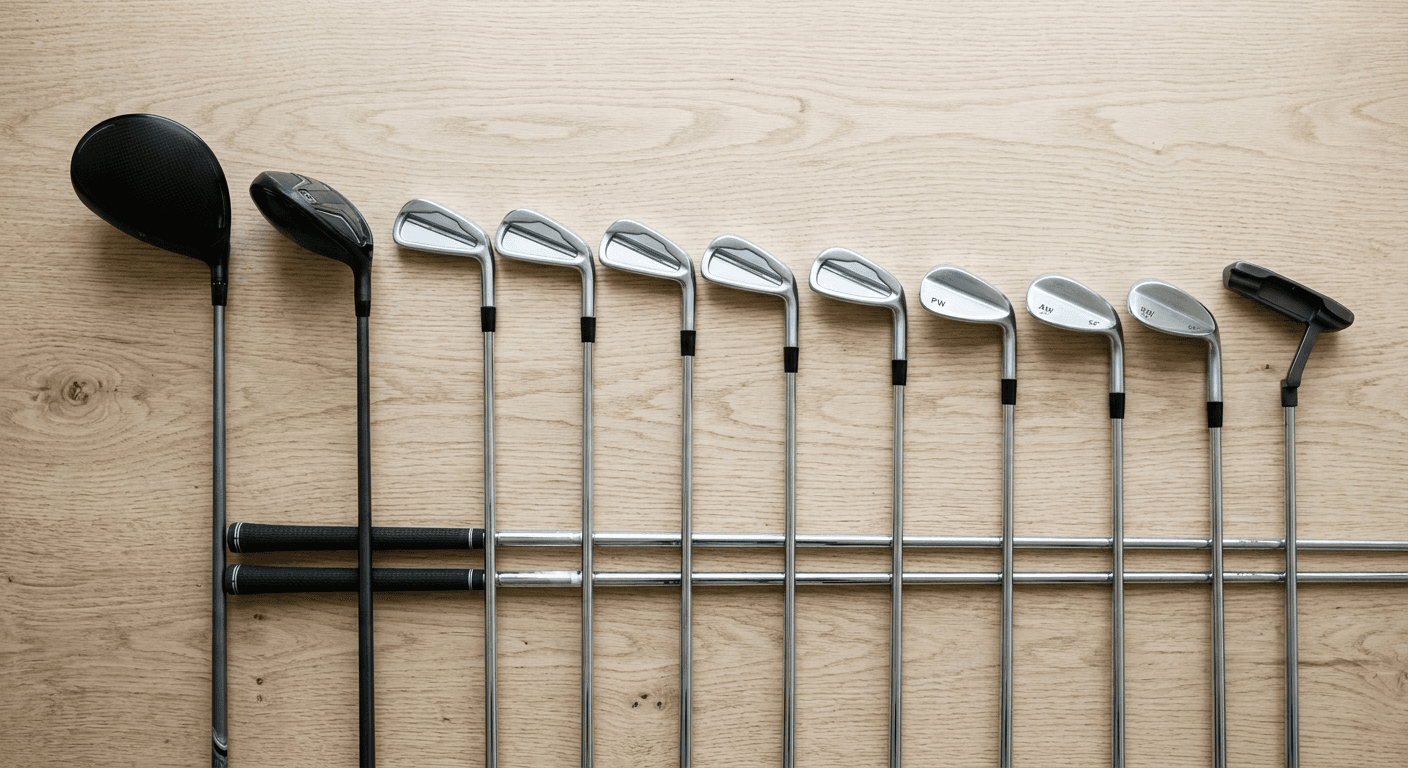
You can build a good bag for a few hundred dollars or spend thousands, and score about the same
Walk into a golf shop and the numbers stop making sense in a hurry. A single driver can run more than a full beginner set. A boxed set that covers your whole bag costs less than one premium wedge. So how much should you actually spend? The honest answer is far less than the industry would like, and where you put the money matters more than how much of it you spend.
Below is what a full bag costs at each level, where the money buys you strokes, where it buys you nothing, and how to knock a chunk off the bill without giving up anything that matters.
What clubs actually cost, by tier
Prices move around, but the tiers are stable. Here is roughly what you are looking at for a full bag, buying new at each level.
| Spend tier | Full-bag budget | What you get |
|---|---|---|
| Beginner / budget | $300 - 700 | A boxed starter set, or last-year and used clubs pieced together. Plenty to learn and play well. |
| Mid | $1,000 - 1,800 | Current or one-year-old game-improvement clubs, a real fitted driver, a decent wedge or two. |
| Premium | $2,500 - 4,000+ | New, fully fit clubs across the bag, premium shafts, forged irons, tour-level everything. |
The gap between the beginner and premium bag is enormous in dollars and small in scoring. That is the whole story of golf pricing in one sentence. The trick is knowing which parts of that gap are worth paying to close.
Where the money is well spent
Two areas earn their keep: the driver, and your irons and wedges.
The driver is the club you hit off the tee on most par 4s and par 5s, and the one where a good fit pays off most obviously. A fitted head and shaft can add real yards and, more importantly, tighten up where the ball ends up. This is the one club where I would tell almost anyone to get fit and buy something modern, even if that means a last-year model to keep the price sane.
Irons and wedges are where you actually score. Getting the right head category for your ability, plus a fit for lie angle and shaft, does more for your approach shots than any amount of brand prestige. You do not need forged blades to benefit here. You need irons that match your swing. Our iron buying guide walks through picking the right set, and the iron database lets you compare category and specs across every set rather than going on the marketing.
Where the money is wasted
The putter is where golfers routinely overspend. A 400-dollar milled putter does not hole more putts than a 120-dollar one for the average player. Fit for length and lie matters, and feel matters because you have to trust it, but the price tag does not. Buy a putter that looks right to your eye and rolls the ball well, and stop there.
Last-year models are the other big lever. Clubs improve slowly, and a driver or iron set that is one or two seasons old performs within a hair of the current release while selling for 30 to 50 percent less once the new lineup lands. You are paying for the newest paint job and not much else. This alone can move you from the mid tier into premium-quality gear at mid-tier prices.
Buy the fit, not the release year.
A last-year driver that is fit to your swing will beat a brand-new one off the rack every time. The money that separates good gear from great gear is mostly in the fitting and the shaft, not the model year on the crown.
A sensible budget at each level
New to the game. Spend 300 to 700 dollars and no more. A boxed starter set covers most of the bag for a few hundred, or you can piece together last-year and used clubs for similar money. You will make big swing changes in your first couple of years, so there is no sense fitting for a swing that will not exist by next season. Once you know you are sticking with it, upgrade the driver and irons first.
Committed mid-handicapper. The 1,000 to 1,800 range is the value sweet spot. Get a fitted driver, a set of game-improvement irons in your ability category, and a wedge or two. Lean on last-year models and you can hit the top of that quality band near the bottom of that price band.
Premium. If you play a lot, strike it well, and want the newest fitted everything, 2,500 to 4,000 dollars and up gets you there. Just go in knowing that above the mid tier you are buying feel, looks, and the latest release far more than lower scores.
For a worked example of building a strong bag on a tight budget, see our roundup of the best clubs under 500 dollars.
Diminishing returns at the top
The single most useful thing to understand about golf equipment is that the return on money spent flattens out fast. Going from old, ill-fitting clubs to modern, properly fit ones is a genuine jump. Going from a good fitted mid-tier setup to a maxed-out premium one is a small, mostly perceptible-only difference for the average golfer.
A 500-dollar driver does not outscore a 350-dollar one for most players once both are fit. Forged blades do not lower a 15-handicap's scores versus forgiving cast irons. The premium tier exists for feel, aesthetics, and the people who genuinely benefit at the margins, tour pros and low-single-digit amateurs. If that is not you, the money is better spent on lessons and range time.
Cut the bill with used and last-year gear
Used clubs are the fastest way to get more club for your money. A driver two or three years old in good shape can cost a third of new, and a set of used irons even less, and the performance gap is small. The keys are checking the condition of faces and grooves, matching the specs to your swing, and buying from somewhere with a return window. Our full guide to buying used golf clubs covers what to inspect and where to shop.
Whatever your budget, start by narrowing the field to clubs that fit your game. The free club finder matches gear to your carry distances and ability so you spend on the right clubs rather than the loudest ones.
Frequently asked questions
How much should a beginner spend on golf clubs?
A beginner can build a solid full bag for 300 to 700 dollars and does not need to spend more. A boxed starter set covers most of the bag for a few hundred, or you can piece together last-year and used clubs for similar money. Save the big spend until you know you will keep playing and have a settled swing worth fitting for.
Which clubs should I spend the most on?
The driver and your irons and wedges. The driver is in play off the tee on most holes and a good fit saves yards and errant shots, while irons and wedges are where you actually score, so a fit for lie and shaft pays off. The putter and, to a point, fairway woods and hybrids are the places to save.
Are expensive clubs worth it?
Up to a point. Moving from old or ill-fitting clubs to modern fitted ones helps a lot. Beyond a mid-tier fitted setup the gains flatten out, and for the average golfer a top-dollar driver does not outscore a mid-priced one. Past that point you are paying for feel and the newest release, not lower scores.
Is it worth buying last-year model clubs?
Almost always. Clubs improve slowly, so a model that is one or two seasons old performs within a hair of the current release while costing 30 to 50 percent less once the new lineup arrives. It is the best value move in the game and you give up little more than the newest finish.