Steel vs Graphite Shafts: Which Should You Play?
The shaft is the engine of the golf club, and its material changes launch, feel, and speed as much as the head does. Graphite stopped being a senior-only option years ago. Here is how steel and graphite actually differ, and how to pick the right one for your irons.
January 15, 2026
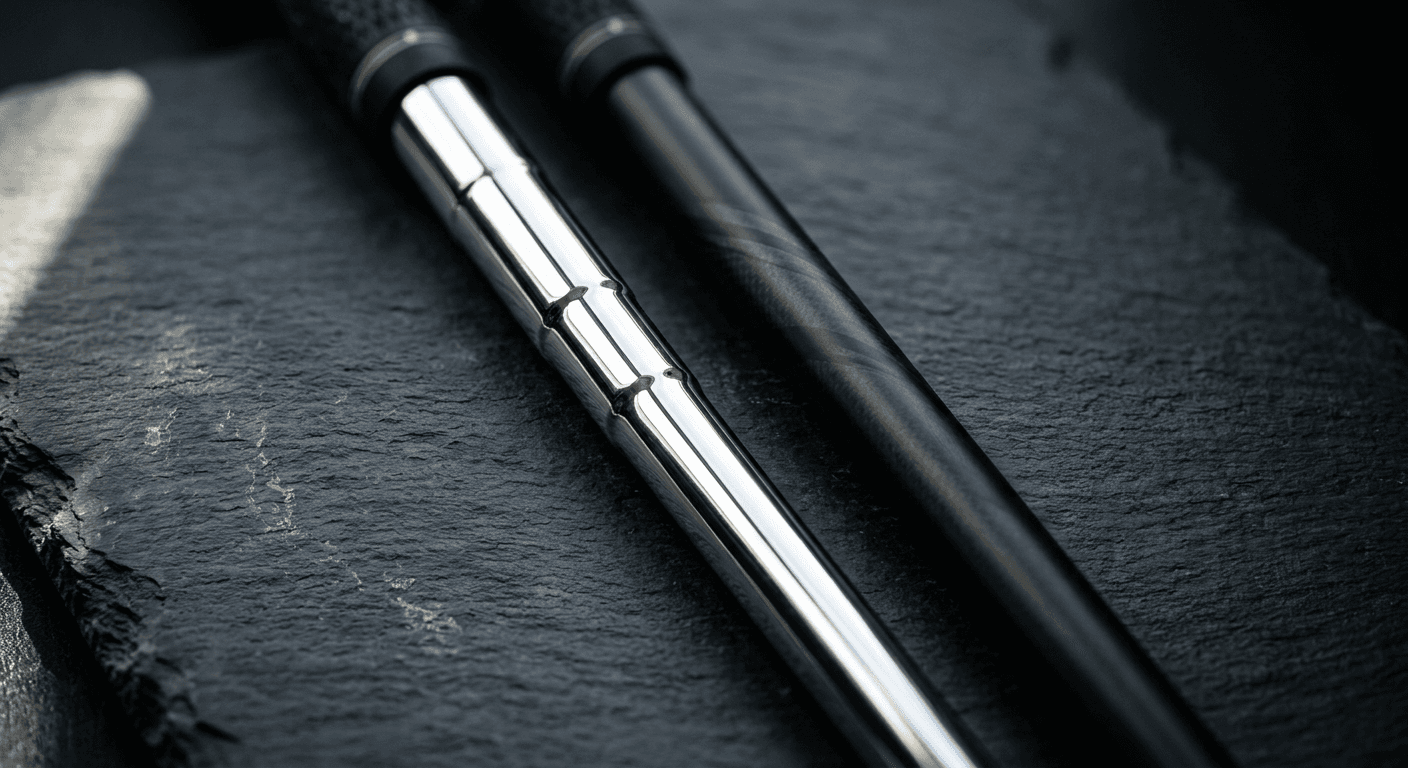
Steel and graphite iron shafts deliver the same head very differently
Golfers spend hours choosing a head and then take whatever shaft comes in the box. That is backwards. The shaft is the only part of the club you actually swing, and its material sets how the club loads, how fast you can move it, and how the strike feels in your hands. For drivers and woods the choice was settled long ago, graphite won. In irons, the steel-versus-graphite decision is still live, and it is the one worth thinking about.
The short version: the difference is mostly about weight, and weight drives everything else. Once you see that, the choice gets a lot simpler.
The one difference that drives the rest
Steel iron shafts weigh roughly 100 to 130 grams. Graphite iron shafts run lighter, usually 50 to 90 grams, though premium models now reach into the 90s to feel more like steel. That weight gap is the root of almost every other difference.
A lighter shaft is easier to swing faster, which can add speed and launch. A heavier shaft is easier to control and repeat, and it sends more of the impact back to your hands. Neither is better in the abstract. They fit different swings.
| Attribute | Steel | Graphite |
|---|---|---|
| Typical weight | 100-130 g | 50-90 g |
| Swing speed | Rewards faster swings | Helps add speed |
| Launch and spin | Lower | Higher |
| Feel | More feedback, firmer | Damped, smoother |
| Consistency | Very high | High (premium) to variable (budget) |
| Cost | Lower | Higher, especially premium |
| Easy on joints | Less | More |
Where steel wins
Steel is the default in iron sets for good reason. It is consistent from shaft to shaft, it is cheaper, and it delivers a firm, connected feel that many players use to sense exactly where they struck the face. If you have the speed to move a heavier shaft and you value feedback and control over the last few yards, steel is a safe, proven choice.
Steel also tends to launch lower and spin a touch less, which stronger players often prefer for a more penetrating, controllable flight. The heavier weight can smooth out an aggressive tempo too, keeping a fast swing from getting loose.
Where graphite wins
Graphite earns its place on three fronts: speed, launch, and comfort. The lighter weight helps slower and moderate swingers pick up clubhead speed, and the higher launch gets the ball up and landing softer, which is exactly what a player who struggles to elevate long irons needs.
The comfort part is underrated. Graphite dampens the vibration that travels up the shaft at impact, which matters a lot if you have wrist, elbow, or hand pain, or if you play a high volume of golf. A lot of players move to graphite not for distance but so their hands feel fine after a range session.
Graphite in irons is not a senior product anymore.
Premium graphite iron shafts are built to the same tolerances as steel and are played on tour. The old knock, that graphite is whippy and inconsistent, applies to cheap graphite, not to a quality, properly fit shaft.
Drivers, woods, and the rest of the bag
Outside the irons, the decision is basically made for you. Drivers, fairway woods, and hybrids come in graphite because those clubs are long and swung fast, and steel would be too heavy to be efficient. You will almost never fit a driver with a steel shaft.
Putters are the exception in the other direction. Most putter shafts are steel because a putting stroke does not need speed or launch, and the stability of steel suits the job. So the real material decision, the one this guide is about, lives in the irons and occasionally the wedges.
Which one fits you
Use swing speed as the starting point, then adjust for feel and physical comfort.
Under 85 mph driver speed: graphite is usually the better fit. The added speed and higher launch help you carry the ball and hold greens, and the lighter weight is easier to swing all round.
85 to 95 mph: this is the crossover zone, and it comes down to feel. Many players here are happy with steel, but lightweight steel or heavier graphite are both worth testing. Joint comfort can tip the decision toward graphite.
Above 95 mph: steel is the common choice for control and feedback, though plenty of fast swingers now play premium heavier graphite for the vibration damping without giving up consistency.
Speed is only the first filter. If your hands hurt, lean graphite. If you rely on strike feedback, lean steel. And remember that flex and weight within each material matter as much as the material label, which is why a fitting beats a guess. Our shaft flex guide covers how to match flex to your speed once you have picked a material.
How to actually decide
Hit both on a launch monitor with your own swing. Material previews and spec sheets cannot tell you how a shaft loads for you. Look at three numbers: carry distance, launch and descent angle, and dispersion. If graphite gives you meaningfully higher launch and tighter dispersion, take it. If steel gives you the same numbers with a feel you trust, save the money.
If you want to narrow the head first, the free club finder matches iron sets to your carry distances, and the iron database lists the stock shaft options for every set so you can see which come in graphite before you book a fitting.
Frequently asked questions
Is graphite or steel better for beginners?
For most beginners, graphite. The lighter weight is easier to swing, the higher launch helps get the ball airborne, and the softer feel is more forgiving on mishits. Faster, athletic beginners who already generate speed can start with steel if they prefer the feedback.
Does the shaft matter more than the head?
They matter in different ways. The head sets forgiveness, loft, and category, while the shaft sets how you deliver it. A great head on the wrong shaft plays worse than a good head on the right one. Neither is optional in a fitting.
Will switching to graphite change my distances?
Often yes, so re-check your gapping after a switch. Lighter graphite can add a few yards and change launch, which shifts your carry numbers slightly across the set. See how far you should hit each club to reset your expectations.
Are lightweight steel shafts a middle ground?
They can be. Lightweight steel, around 95 to 105 grams, keeps steel consistency and feedback while shaving weight to help speed. It is a common recommendation for players in the crossover speed range who want steel feel without the full heft.