Golf Ball Compression Explained: What It Means and How to Choose
Compression ratings are everywhere on golf ball packaging. Most golfers have only a vague idea what they mean. Here is the actual explanation, the data, and how to pick the right number for your swing.
June 24, 2026
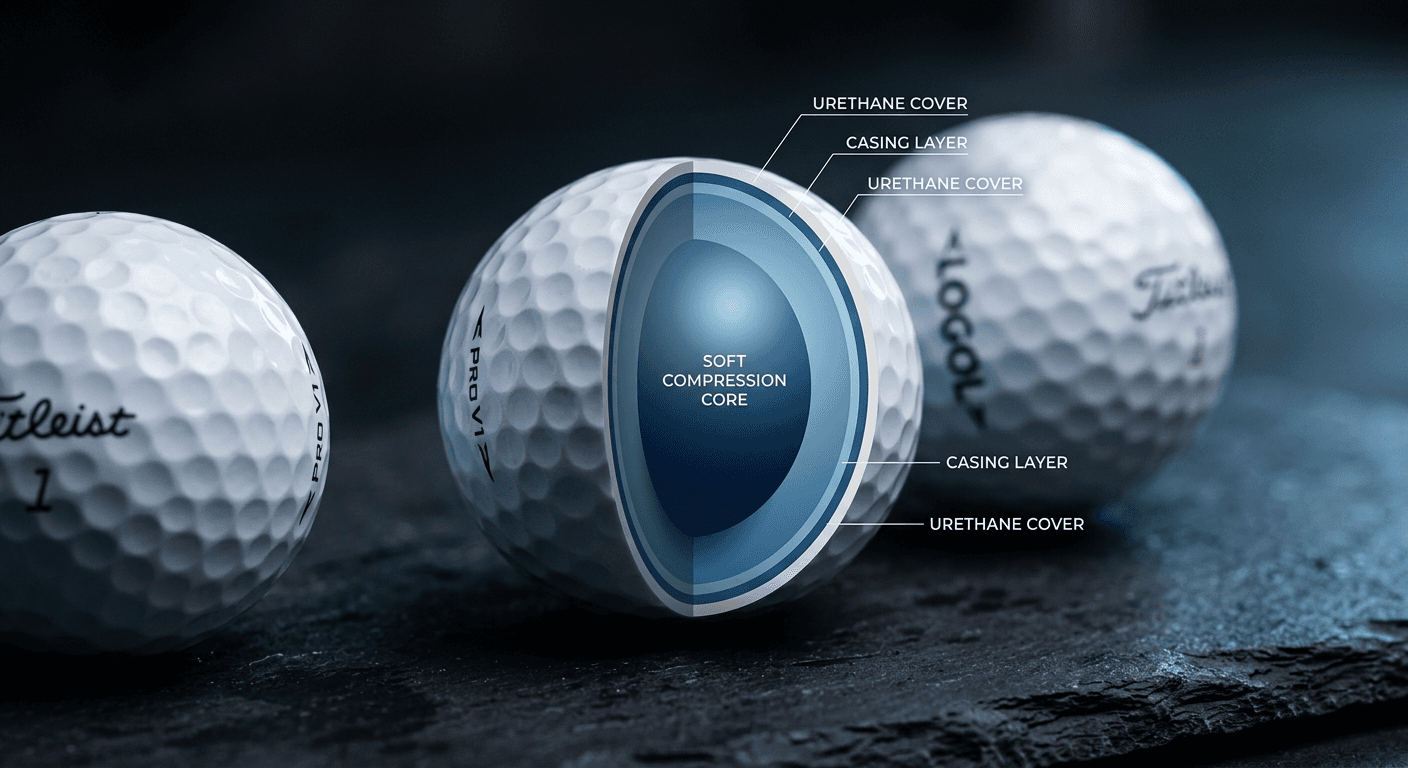
Ball compression affects energy transfer at impact - but only when matched to your swing speed
Golf ball marketing runs on two words: soft and distance. Every brand promises both. Compression is the number underneath those claims, and it actually means something specific, which is more than you can say for most of what gets printed on ball packaging.
The short version: compression measures how much a ball deforms when struck. A low number means more deformation at lower force. A high number means the ball resists deformation until hit harder. Match the compression to your swing speed and you get better energy transfer. Mismatch it and something suffers, either distance or feel or both.
How compression ratings work
Compression is measured by applying a standardized load to a ball and recording how much it deflects. The original Atti compression scale ran 0-200; most balls tested between 80 and 110. Modern ratings use a different scale but the concept is the same. A 50-compression ball deflects significantly under a moderate force. A 100-compression ball barely moves under the same force.
When a clubface meets a ball at 90 mph, the ball flattens by roughly 10-15% of its diameter in the few milliseconds of contact. How well the ball springs back from that deformation determines how much energy transfers to the shot. A ball that is too firm for your speed does not fully compress, wastes energy as heat, and often produces excess spin. One that is too soft over-compresses and goes sloppy.
The feel you sense at impact is mostly cover material, not compression.
Impact lasts about 0.5 milliseconds. That is too short for your hands to register core compression. The "soft" feeling on a Pro V1 comes from its urethane cover, not its 87-compression core. Ionomer-covered balls feel harder regardless of their compression rating.
Compression ratings of popular 2025-2026 balls
Manufacturers do not always publish exact compression figures, and testing labs sometimes produce different numbers for the same ball. The ranges below are based on published specs and independent testing data.
| Ball | Compression | Cover | Best for |
|---|---|---|---|
| Callaway Supersoft | 35-40 | Ionomer | Under 80 mph |
| Srixon Soft Feel | 50-60 | Ionomer | Under 85 mph |
| Wilson Duo Soft+ | 29-35 | Ionomer | Under 80 mph |
| Titleist AVX | 75-80 | Urethane | 80-95 mph |
| TaylorMade Tour Response | 70-80 | Urethane | 85-95 mph |
| Callaway Chrome Soft | 75-80 | Urethane | 85-100 mph |
| Titleist Pro V1 | 85-90 | Urethane | 90-105 mph |
| TaylorMade TP5 | 85-90 | Urethane | 90-105 mph |
| Titleist Pro V1x | 95-100 | Urethane | 95-110 mph |
| TaylorMade TP5x | 95-100 | Urethane | 95-110 mph |
| Bridgestone Tour B X | 90-95 | Urethane | 95-110 mph |
| Callaway Chrome Tour X | 90-95 | Urethane | 95-110 mph |
Matching compression to swing speed
The guideline is simple, though people ignore it constantly. Slow swings need low compression. Fast swings need high compression. That is the whole rule.
Below 85 mph, a tour ball like the Pro V1 does not compress properly. You get a harder feel, more spin than you want off the driver, and slightly less distance than a ball built for your speed would give. None of these differences are enormous, but they compound over a round. A 60-mph female golfer playing a Pro V1x is playing genuinely the wrong equipment.
Above 95 mph, a low-compression ball like the Supersoft over-compresses. The ball goes soft in a bad way, spin climbs, and distance falls. A 100-mph male golfer on a range bucket of Softsofts is leaving yards on the table.
| Driver swing speed | Recommended compression | Example balls |
|---|---|---|
| Under 75 mph | 30-50 | Wilson Duo Soft+, Callaway Supersoft |
| 75-85 mph | 50-70 | Srixon Soft Feel, Callaway Supersoft Max |
| 85-95 mph | 70-85 | TaylorMade Tour Response, Titleist AVX |
| 95-105 mph | 85-95 | Titleist Pro V1, TaylorMade TP5, Callaway Chrome Soft |
| Over 105 mph | 95-110 | Titleist Pro V1x, TaylorMade TP5x, Bridgestone Tour B X |
If you do not know your swing speed, this is the most important thing you can do before buying a dozen balls. A launch monitor session at a range or golf retailer takes 20 minutes and gives you a real number. Self-estimated speeds tend to run 5-10 mph high. Most male recreational golfers who think they swing 95 mph are actually at 87-90.
Why most golfers play the wrong ball
Tour balls sell better than everything else despite being wrong for most of the people buying them. The Pro V1 is a 90-compression ball designed for golfers swinging 95 mph or faster. The average male amateur swings at 89-92 mph. That is close enough that the mismatch is minor, but a large portion of golfers playing Pro V1s are below 85 mph and genuinely losing something.
The soft-ball-goes-farther myth drives some of this. At slow speeds, it is true: soft compression transfers energy better than a stiff one. But people generalize it. At 100 mph, a 35-compression ball does not go farther. It goes softer, spins more, and usually goes slightly shorter.
The other factor is aspiration. Players identify with the tour ball. There is nothing wrong with playing a Pro V1 if you like how it feels around the greens and the distance penalty off the tee is acceptable to you. But it is worth knowing what you are trading.
Mid-compression urethane balls are the underrated option
Balls like the TaylorMade Tour Response (70-80 compression) and Titleist AVX (75-80 compression) give you a urethane cover (better short-game spin than ionomer) at a compression that actually works for 85-95 mph swings. They cost less than tour balls and perform better for most recreational golfers than the Pro V1 or TP5.
Layers, covers, and what actually affects feel
Ball construction is a separate topic from compression, but the two get conflated constantly. A two-piece ball has a single core and a cover. A three-piece adds a mantle layer. Tour balls are typically four or five pieces. More layers allow designers to tune spin rates differently at different speed ranges, which is why a Pro V1 can spin low off the driver and high on wedge shots.
Cover material matters more than compression for feel, especially around the greens. Urethane covers grip the grooves on wedges and chip shots, producing more spin and control. Ionomer covers are harder and more durable but produce less short-game spin. This is probably the most meaningful distinction between a budget ball and a tour ball for a 90-mph golfer, more than the compression difference.
Frequently asked questions
What compression is the Pro V1?
About 87-90, depending on the testing method. The Pro V1x runs slightly higher, around 95-100. Both are designed for swings above 90 mph, with the x version fitting the 100-plus crowd better.
Does temperature affect compression?
Yes, meaningfully. Cold temperatures make the ball core stiffer, effectively raising the compression. A 90-compression ball at 40 degrees plays more like a 100-compression ball. This is one reason distance drops in cold weather beyond just air density. In winter rounds, most golfers would benefit from a lower-compression ball than they use in summer.
Should seniors use low-compression balls?
Generally yes, because swing speed tends to drop with age. A golfer who once swung 95 mph and played Pro V1s but now swings 80 mph is playing a ball that no longer fits. The AVX, Tour Response, or even the Srixon Soft Feel are worth testing. The right compression for your current speed matters more than brand loyalty to whatever you played ten years ago.
Is higher compression always better for faster swings?
Up to a point. Above about 110 compression, the benefits plateau for most golfers. Playing a 110-compression ball when you swing 105 mph does not help and can hurt. The sweet spot for a 105-mph swing is roughly 95-100 compression.
How does swing speed affect which ball I should use?
For a full breakdown of driver swing speed averages by age, handicap, and gender, the swing speed guide has the reference data. Pair that with the compression table above and you have the information to pick the right ball without guessing.