Best Golf Gloves in 2026: Cabretta vs Synthetic, Sizing, and What Actually Lasts
Cabretta leather, synthetic, and hybrid gloves all have a place, but only one fits your hand, your climate, and your swing. Here's how to pick, plus the 2026 gloves worth your money.
May 7, 2026
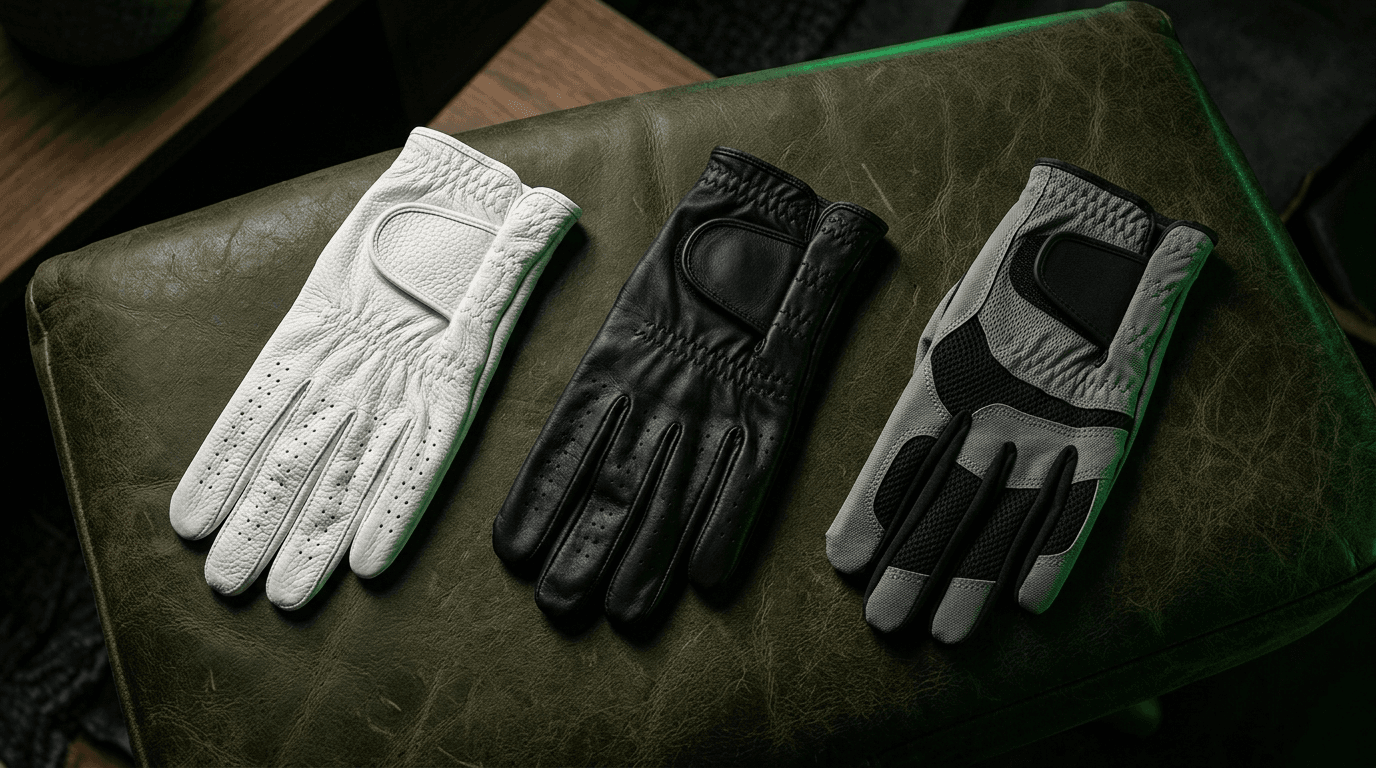
Premium cabretta, synthetic, and hybrid gloves, each suited to different hands and conditions
Why The Glove Matters More Than You Think
A glove is the cheapest piece of equipment in your bag and the most consequential one most golfers ignore. It is the only thing between your skin and the grip, and the grip is the only thing between you and the club. When the glove fails, slips, bunches, sweats through, or simply wears down, the hand reacts before you can think about it. Tension creeps in. Grip pressure goes up. The face does not return to square the way it did in practice. A $20 glove can quietly cost you strokes for a full season.
The good news is that picking the right glove is not complicated once you know what to look for. The bad news is that nearly every golfer is wearing the wrong size, the wrong material, or both, and switching solves problems they assumed were swing flaws.
Cabretta Leather, Synthetic, or Hybrid?
Three materials cover the entire glove market. The right choice depends on climate, sweat profile, round frequency, and how much you value feel versus durability.
Cabretta Leather
Cabretta is the premium material, soft, thin sheepskin from a specific breed raised in regions like Ethiopia, Nigeria, and Brazil. The leather is highly tactile, breaks in to your hand within a round or two, and gives the best feedback through the grip. It is what most tour players wear.
The trade-off is durability and price. A cabretta glove costs $20 to $30 and typically lasts 10 to 15 rounds before the palm thins out and the grip surface gets shiny. In wet or humid conditions, the leather absorbs moisture and stiffens unevenly as it dries. Many cabretta gloves never recover the original fit after a single rain-soaked round.
Cabretta is the right choice if you play in mild, dry conditions, want the best possible feel, and rotate two or three gloves at a time so each one gets a chance to recover between rounds. Tour players use a fresh glove almost every round, which is why feel-focused leather makes sense for them.
Synthetic
Synthetic gloves use engineered microfiber and rubber compounds that mimic leather's tactile response without the absorption issues. The good ones, and there are many in 2026, are nearly indistinguishable in feel from cabretta in dry conditions, and dramatically better in heat and humidity. They cost less ($12 to $22 typically), last 25 to 40 rounds, and dry overnight even after being soaked.
The case against synthetic used to be feel and stretch. Both are largely solved problems now. Modern synthetic gloves stretch enough to conform to the hand, and the surface treatments give a tacky, leather-like grip even when new. If you sweat through gloves in summer or play more than twice a week, synthetic is the better choice for almost every golfer who isn't a single-digit handicap chasing the last 2 percent of feel.
Hybrid
Hybrid gloves combine cabretta panels (usually across the palm and grip zones) with synthetic mesh or microfiber on the back of the hand. The result is a glove that breathes better than full leather, holds shape longer than full synthetic, and gives most of the feel of cabretta where it matters most.
Hybrids are the right choice for golfers who want premium feel but play in mixed conditions - warm summers, cool fall mornings, occasional rain. They cost about the same as full cabretta ($20 to $28) and typically outlast them by 5 to 10 rounds. The Titleist Players Tech and the FootJoy Pure Touch Limited are good examples of the category.
How To Size A Glove Correctly
The single biggest mistake golfers make is wearing a glove that is too big. A loose glove forces you to grip the club tighter to compensate for the slip, which kills feel and breeds tension. A correctly sized glove is snug, almost uncomfortably so for the first 30 seconds - and then conforms to the hand as the leather or synthetic warms.
Glove sizing runs Small, Medium, Medium-Large (M/L), Large, and X-Large, with Cadet variants for shorter, wider hands (more on those below). To measure: place a tape measure around the widest part of your dominant hand (the knuckles, excluding the thumb), and use the chart below as a starting point.
- Small: 7 to 7.5 inches
- Medium: 7.5 to 8 inches
- Medium-Large: 8 to 8.5 inches
- Large: 8.5 to 9 inches
- X-Large: 9 to 9.5 inches
Cadet sizing matters more than most golfers realize. About a third of golfers have shorter fingers relative to their palm width, a wider hand without long fingers. A standard glove in that case leaves a visible gap at each fingertip. Cadet gloves have the same palm circumference as the standard size but shorter finger lengths. If your gloves always end up with empty fingertips, switch to Cadet and the fit problem disappears.
The Climate Question
Where and when you play should drive material choice more than personal preference. A few rough guidelines from years of glove wear data:
- Cool and dry (45-70°F, low humidity): Cabretta or premium hybrid. Feel is at a premium when the hand isn't sweating.
- Warm and humid (70-90°F, high humidity): Synthetic or hybrid with mesh back. Cabretta will saturate.
- Hot and dry (85°F+, low humidity): Cabretta or hybrid, heat alone doesn't damage leather, sweat does.
- Wet conditions (rain or heavy dew): Dedicated rain gloves, typically synthetic and worn on both hands. Regular gloves are not designed for water.
- Cold (below 45°F): Winter gloves on both hands until you swing, or thermal gloves that come off for the shot.
The Top 5 Gloves of 2026
1. Titleist Players, Best Premium Cabretta
The Titleist Players has been the benchmark cabretta glove for years and the 2026 version refines a formula that didn't need fixing. The cabretta is thinner than competitors, which gives excellent feedback through the grip, and the satin closure tab is more durable than the velcro most competitors use. The trade-off is durability, expect 8 to 12 rounds before noticeable wear.
Best for low-handicappers and feel-focused players in mild conditions. Not for golfers who sweat heavily or play in humid climates.
2. FootJoy WeatherSof, Best All-Around Synthetic
The WeatherSof is the highest-volume golf glove sold in the world for good reason. The synthetic material handles heat and moisture far better than cabretta, the fit is consistent across sizes, and the price-to-durability ratio is unmatched. Expect 25 to 35 rounds even in tough conditions.
Best for high-frequency golfers, warm climates, and anyone who wants reliable performance without thinking about glove maintenance.
3. Titleist Players Tech, Best Hybrid
The Players Tech pairs cabretta on the palm and grip surface with breathable microfiber on the back of the hand and around the knuckles. The feel is 95 percent of the full Players, the breathability is dramatically better, and durability lands somewhere between the two - typically 15 to 20 rounds.
Best for golfers who want cabretta feel but play often, sweat moderately, or live somewhere with warm summers.
4. FootJoy StaSof, Best Cabretta Durability
The StaSof uses a slightly thicker cabretta than the Titleist Players, which sacrifices some feel for noticeably better longevity, 12 to 18 rounds is realistic. The fit is structured and snug, which suits players with average-to-narrow hands. Wider hands should consider the Cadet sizing.
Best for golfers who want leather feel but can't justify replacing gloves every 10 rounds.
5. TaylorMade Tour Preferred, Best Tour-Spec Feel
TaylorMade's top-tier glove uses the same AAA-rated cabretta as the tour staff bags. The leather is thinner than the Titleist Players, which gives more feedback at the cost of durability , 8 to 10 rounds is typical. The cuff is also slightly longer than the Titleist, which suits players who like more wrist coverage.
Best for low-handicappers, ball-strikers who want to feel face angle at impact, and players who rotate three or four gloves at a time.
Care And Storage
After every round, smooth the glove flat, do not crumple it into a bag pocket. Crumpling sets wrinkles into the palm that you can never iron out and that create slick spots where the grip contacts. Most gloves come with a small piece of cardboard or a glove keeper specifically for this reason.
Let the glove air-dry away from direct heat. A car dashboard or a heater vent will harden leather and warp synthetic. If a glove is fully soaked, lay it flat in a well-ventilated spot and accept that it may take 24 hours to fully recover.
Never machine wash a glove. The agitation breaks down the bond between the leather and the backing, and the dryer's heat will shrink it half a size. If a glove gets dirty, a damp cloth and a tiny amount of mild soap on the palm, wiped, not scrubbed, is all the cleaning you should do.
How To Stop Buying The Wrong Glove
The fastest way to land on the right glove permanently is to buy one of each from a brand you trust, one cabretta, one synthetic, one hybrid, in the same size. Wear each one for three rounds in the conditions you actually play in. The right answer becomes obvious within a week.
Glove choice is also a function of grip choice. If you regrip with corded grips for better traction, you can run a softer glove. If you play standard rubber grips, a tackier glove offsets the smoothness. The interaction between the glove and the grip is the system that determines feel, both pieces matter, and they should be selected together.
Once you find the right glove, the upgrade is to buy three at once and rotate. The marginal cost is small, and the consistency of having a glove that always fits the same way over a full season pays off in lower scores and fewer mid-round adjustments.
What To Do Next
If your current glove is more than 15 rounds old, replace it before your next round and pay attention to whether the first three shots feel more secure. That difference is the cost of a worn glove in real terms.
If you are not sure what size or material to try, start with the FootJoy WeatherSof in your current size and use it as the baseline. From there, decide whether you want more feel (cabretta), more durability (cadet synthetic), or better breathability (hybrid).
And while you're thinking about touch points, check the grips themselves. Worn grips cause as many bad shots as worn gloves , and the two upgrades together are the cheapest stroke-saver in the game.